Salah Headlines Star-Studded List of Free Agents in Summer Transfer Market
Mohamed Salah headlines a star-studded list of free agents in the summer transfer market, alongside Dusan Vlahovic, Jadon Sancho, John Stones, David Alaba and Leon Goretzka.
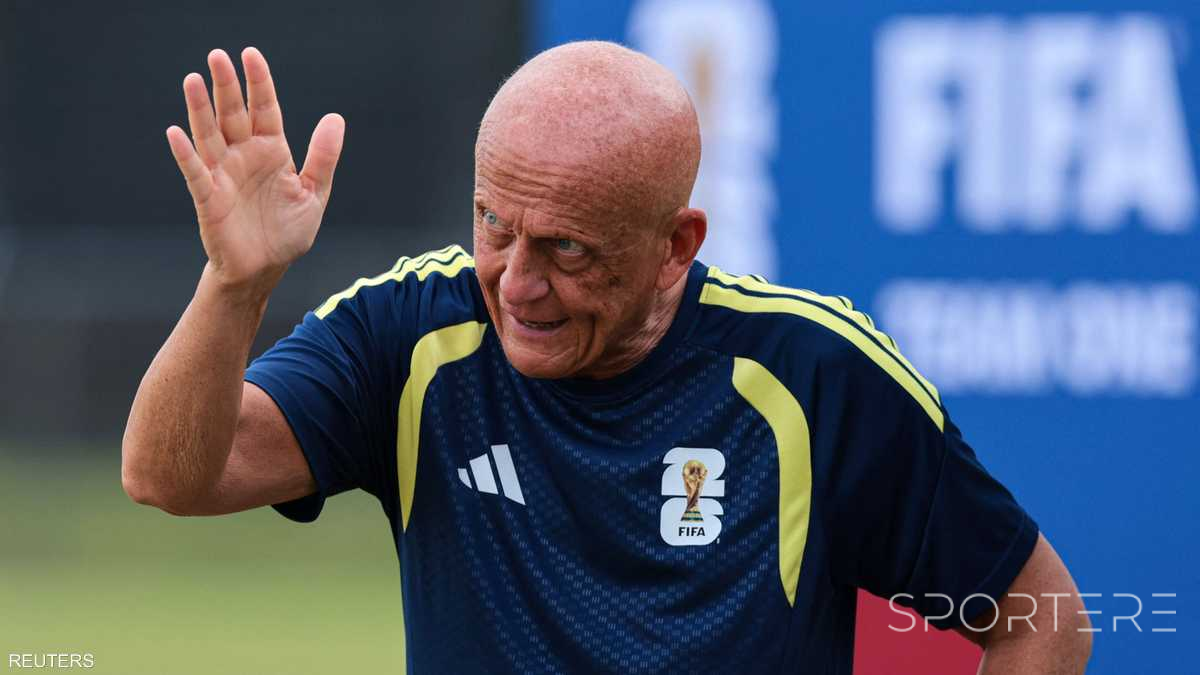
FIFA refereeing chief Pierluigi Collina has addressed the controversial decisions that dominated discussion following Egypt’s World Cup clash with Argentina.
Collina offered explanations for the two incidents that generated the most debate: the disallowed goal scored by Mostafa Zico and Egypt’s late penalty appeal involving Mohamed Salah.
The comments followed widespread criticism of the officiating in the Round of 16 match, which Argentina won 3-2 to eliminate Egypt from the 2026 World Cup.
The decision to disallow Mostafa Zico’s second-half goal became one of the most controversial moments of the tournament.
Zico found the net for Egypt before the video assistant referee reviewed an incident that had occurred earlier in the attacking move.
The referee was eventually sent to the pitchside monitor.
After reviewing the footage, the goal was disallowed because of a foul by Marwan Attia on Argentina defender Lisandro Martinez during the attacking phase.
The decision caused anger among Egypt’s players, coaching staff and supporters because several passes had taken place between the incident and the goal.
Collina explained that VAR checks the attacking possession phase after every goal.
If a potential offence is detected during the build-up and is considered relevant to the goal, the video assistant referee can recommend an on-field review.
According to the FIFA refereeing chief, there is no fixed time or distance limit between the offence and the goal.
The key issue is whether the incident occurred during the same attacking possession phase.
If the attacking team maintains possession and eventually scores, an earlier offence can still be reviewed.
The match officials determined that Marwan Attia’s challenge on Lisandro Martinez occurred during the same attacking phase that eventually produced Zico’s goal.
As a result, VAR considered the incident relevant to the scoring move.
The referee reviewed the footage before deciding that a foul had occurred and cancelling Egypt’s goal.
Despite the official explanation, debate has continued over the amount of time and number of passes between the original incident and the finish.
The second major controversy occurred late in the match.
Egypt appealed for a penalty after Mohamed Salah went down inside the area following contact with Argentina forward Julian Alvarez.
The referee allowed play to continue, while VAR did not recommend an on-field review.
Collina explained that the match officials considered the incident normal football contact rather than a foul deserving a penalty.
VAR does not intervene in every incident involving contact inside the penalty area.
The video assistant referee must identify a clear error in the original decision before recommending an on-field review.
In Salah’s case, the referee and VAR officials determined that the contact with Alvarez was within the normal limits of a football challenge.
The decision to allow play to continue was therefore not considered a clear error.
However, the timing of the incident ensured that it remained one of the most heavily debated moments after the final whistle.
Egypt’s reaction went beyond protests on the pitch.
The Egyptian Football Association submitted an official complaint over the refereeing decisions in the match.
Egyptian officials questioned several incidents they believed had a direct impact on the result and the team’s elimination from the tournament.
The controversy also generated widespread debate among supporters, analysts and international media.
Collina also rejected accusations questioning the integrity of the match officials or suggesting deliberate bias in Argentina’s favour.
The FIFA refereeing chief acknowledged that constructive debate over decisions will always be part of football.
However, he warned against making unsupported accusations against referees.
Collina argued that such claims can expose officials and their families to unacceptable pressure and threats.
Collina has now provided FIFA’s refereeing explanation for both major incidents.
From the officials’ perspective, Zico’s goal was disallowed because the foul occurred during the same attacking possession phase.
The Salah incident, meanwhile, was viewed as normal football contact rather than a penalty offence.
For many Egyptian supporters, however, the explanations are unlikely to end the debate.
The Egypt vs Argentina match has become one of the most discussed games of the 2026 World Cup.
After fan anger, official complaints and widespread debate, Collina’s intervention has provided the refereeing authorities’ position on what happened.
His explanation clarifies how the officials applied the VAR protocol, but disagreement over the decisions is likely to continue.
The central question remains: were the controversial calls a correct application of VAR rules, or did Egypt suffer from an unusually strict interpretation at the most decisive moments of the match?