Salah Headlines Star-Studded List of Free Agents in Summer Transfer Market
Mohamed Salah headlines a star-studded list of free agents in the summer transfer market, alongside Dusan Vlahovic, Jadon Sancho, John Stones, David Alaba and Leon Goretzka.
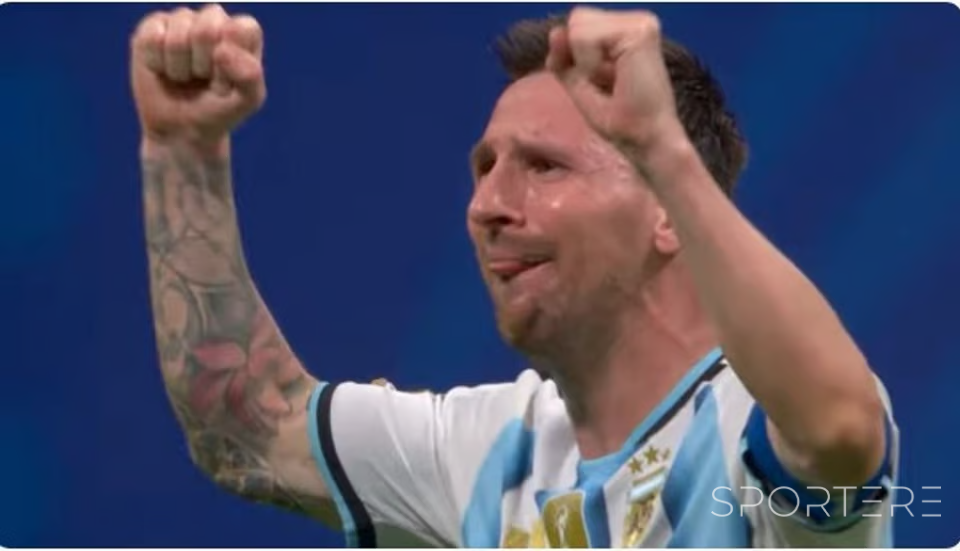
Lionel Messi is not simply Argentina’s captain and one of the greatest footballers in history.
His presence at the 2026 World Cup has also become an important commercial and economic factor.
Figures connected to major advertising campaigns and ticket prices demonstrate the influence that Messi’s continued participation can have on the tournament.
As the World Cup reaches its decisive stages, the Argentina star remains a major attraction far beyond the results on the pitch.
Lionel Messi features in 18 of the 80 major advertising campaigns connected to the 2026 World Cup.
That means the Argentina captain appears in approximately 22% of the tournament’s biggest commercial campaigns.
The figure is extraordinary for a single player at a competition involving hundreds of footballers and dozens of national teams.
It highlights the commercial value Messi represents to brands and companies connected to the World Cup.
Messi’s popularity extends far beyond Argentina supporters or fans of his club teams.
The football icon has a massive global following capable of attracting millions of viewers to matches and advertising campaigns.
Sponsors use that popularity to reach audiences across different continents and commercial markets.
Argentina matches also generate enormous media attention, online searches and social media engagement.
For that reason, Messi’s elimination can have consequences beyond football.
Major advertising campaigns benefit from stars who remain relevant throughout the tournament.
With Messi appearing in almost a quarter of the leading campaigns, an early exit would create a marketing challenge for some companies.
Advertisements built around his presence become less connected to the remaining matches once Argentina leave the competition.
Engagement may also decline among supporters who are primarily following the tournament to watch Messi.
This does not mean those campaigns lose all their value, but it explains why his continued presence matters to sponsors.
Economic concerns are not limited to Messi.
All three host nations — the United States, Mexico and Canada — were eliminated in the Round of 16.
Their exits reduced local interest in some of the remaining matches.
Home supporters are an important source of demand in the ticket market.
When host nations leave a tournament, demand for later matches can change significantly.
One of the most striking economic developments has been the fall in quarter-final ticket prices.
Prices for all four matches dropped by more than 50% compared with their peaks more than ten days earlier.
The decline demonstrates how quickly supply and demand can change during a major tournament.
Results and the elimination of popular teams can transform the value of tickets within days.
Ticket demand depends on several factors.
The identity of the qualified teams, the stars involved and the location of the match all influence prices.
Local and international fan demand also plays a major role.
When a popular team advances or a global star such as Messi remains in the tournament, more supporters may want to attend.
The elimination of host nations or major stars can have the opposite effect.
Messi is one of the few players capable of influencing a tournament far beyond the pitch.
His presence attracts viewers to television and streaming platforms.
It increases media coverage and social media attention.
Brands benefit from using his image in marketing campaigns.
Supporters also search for tickets to matches involving the Argentina captain, especially with the possibility that 2026 could be his final World Cup.
Argentina matches are among the tournament’s biggest attractions.
Millions of supporters want to watch what could be the final chapter of Messi’s World Cup career.
Argentina’s continued presence can therefore help maintain global interest in the tournament.
An elimination could cause some neutral fans to reduce their attention to the remaining matches.
However, the scale of that impact varies across different markets.
The tournament features many of the biggest names in world football.
Messi, however, occupies a unique position because of his history, global popularity and the uncertainty surrounding his future.
Major companies use star players to connect their products with the emotions surrounding the World Cup.
The longer those players remain in the competition, the longer the campaigns featuring them remain connected to the tournament’s biggest moments.
The elimination of one player does not necessarily create a specific direct financial loss for FIFA.
Broadcasting rights, sponsorship agreements and major commercial contracts are generally negotiated in advance.
The potential impact is more visible in areas such as fan interest, ticket demand and engagement with advertising campaigns.
The secondary ticket market and media attention around certain matches may also be affected.
For that reason, the economic impact of a Messi exit is broader than a single financial figure.
Argentina’s continued presence is important from a sporting perspective.
Messi gives the team additional commercial value.
Every Argentina match attracts supporters from around the world, not only from South America.
Some fans travel specifically to watch the legendary forward.
That form of sports tourism can influence ticket sales, hotels, restaurants, transport and official merchandise.
The story of Messi and ticket prices highlights the economic scale of modern sporting events.
The World Cup is not simply a competition between national teams.
It is also a massive commercial event built around broadcasting, sponsorship, advertising, ticketing and tourism.
The most popular stars can significantly influence attention across that entire system.
With Messi appearing in 18 of the tournament’s 80 biggest advertising campaigns, the concern surrounding his potential elimination becomes easier to understand.
For supporters, the match and the trophy remain the most important factors.
For sponsors, advertisers and the ticket market, the identity of the teams and players who advance also carries significant value.
Messi is an exceptional case because he combines sporting achievement with enormous global fame.
As the 2026 World Cup continues, the numbers show that every step Argentina take affects more than the race for the trophy.
The impact extends to advertising, ticket prices and worldwide attention around football’s biggest tournament.